

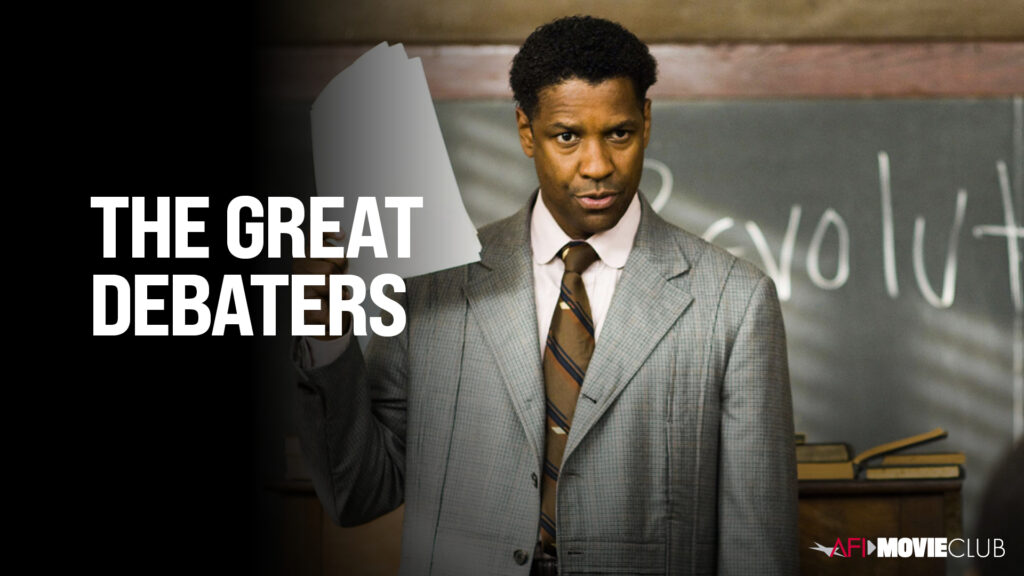
How speech, when mastered, structured, and courageous, becomes a tool for mental decolonization and the achievement of dignity.
The film “The Great Debaters” by and starring Denzel Washington, although set in segregated Texas in the 1930s, offers a relevant allegory for contemporary Africa. It dissects how speech, when mastered, structured, and courageous, becomes a tool for mental decolonization and the achievement of dignity.
Speaking and Acting for Oneself
By analyzing the strategy of Professor Melvin B. Tolson (played by Denzel Washington), we discover a model of transformational leadership whose challenge is crucial: to forge leaders who do not simply speak for the people, but who also give them the intellectual tools to speak and act for themselves.
Speech is not a goal, but a battleground where the historical responsibility of a generation is at stake.
The film immerses us in the daily life of Wiley College, a small historically Black university in Texas. Professor Melvin B. Tolson forms a debate team to compete against the country’s leading white universities, including the prestigious Harvard.
The players are clear: on one side, Tolson and his students (Samantha Booke, Henry Lowe, James Farmer Jr.), who represent the “invisible” and “silent” members of the system. On the other, the established order of white supremacy, symbolized by academic institutions and the omnipresent violence of the Ku Klux Klan. What’s at stake is more than a simple oratorical joust; it’s a struggle for the recognition of their humanity and intellectual equality. Speech is not a goal, but a battleground where the historical responsibility of a generation is at stake.
Consistency between Words, Ethics, and Service
Tolson’s leadership, as presented, can be defined in these three points:
Leadership as the “Art of Organized Self-Abnegation”: Tolson is the epitome of the leader who creates the conditions for others to become the subjects of their own story. He doesn’t seek the spotlight for himself; he pushes his students beyond their limits, shaping them to become the true heroes of the story. His authority comes not from his status, but from his consistency between words, ethics, and service. By day, he is a demanding teacher; by night, he is a union organizer who risks his life for the sharecroppers, demonstrating that words (teaching) and actions (social struggle) are inseparable.
Tolston’s authority comes not from his status, but from his consistency between words, ethics, and service.
The Strategy of “Embodied Knowledge”: Wiley’s team doesn’t win by simply adopting their opponents’ codes. Tolson teaches them how to transform their suffering into a lever for collective action. Their arguments against injustice are not purely intellectual constructs; they are informed by their lived experience of oppression. By forcing them to research, argue, and “produce their own narratives,” he arms them against epistemic dependency and allows them to think and act by and for themselves.
Speech as Conquest, Not as Gift: The film shows that legitimacy cannot be decreed, it must be won. Every debate is a battle to impose a kairos (a moment of truth) against chronos (the long and oppressive time of segregation). Wiley’s team doesn’t ask permission to speak; they speak, demonstrating through the power of argument their right to exist and to matter. It is a perfect illustration of peace as a daily practice of dialogue and negotiation, even under radically asymmetrical conditions.
Rigorous Training, Storytelling & Strategic Verbal Joust
The Tolson Method is a true action plan for forging autonomous leadership through rigorous training, storytelling, and strategic verbal joust.
Preparation is non-negotiable. Tolson subjects his students to an iron intellectual discipline: in-depth research, memorization, and anticipation of opposing arguments. This phase is crucial: freedom of speech is acquired through absolute mastery of one’s subject.
The greatest victory is not just winning, but forcing the opponent and the audience to recognize the legitimacy of their presence and their words.
It’s not just about the facts, but how to organize them. Tolson teaches them to construct a powerful narrative, to choose words that not only convince, but also move and destabilize the opponent. It’s the art of decolonizing language to serve one’s own cause.
The debate is the moment of execution. Students must demonstrate agility, courage, and composure. The film shows that the greatest victory is not just winning, but forcing the opponent and the audience to recognize the legitimacy of their presence and their words.
Limits and Risks of Speech
The film, while an ode to the power of speech, subtly exposes its limits and risks. Indeed, the strength of Tolson’s character lies in his double life. He knows that victories in lecture halls, however symbolic, are futile if they are not coupled with a political and social struggle on the ground (his union activism). The lesson is clear: African leadership cannot be satisfied with eloquence in international forums; it must be rooted in community projects and local coalitions.
Charismatic leadership must aim to render itself irrelevant by training active and courageous minorities capable of operating autonomously.
The team is initially highly dependent on Tolson as its guardian figure. The film’s turning point is the moment when the students, and in particular James Farmer Jr., must take over in his absence. This highlights a constant danger: charismatic leadership must aim to render itself irrelevant by training active and courageous minorities capable of operating autonomously.
Debate is a demanding intellectual exercise. Criticism could be expressed that this model values an intellectual elite. However, the film counters this by showing that the team’s arguments are drawn from the lives of the people (sharecroppers, lynching victims), creating a bridge between “embodied knowledge” and popular struggle.
Lessons from the “Great Debaters”
What lessons can we learn from the “Great Debaters”? There are three main lessons that we can translate into concrete actions for Africa today:
For Leaders (Political, Economic, Social): it is about embodying consistency between words, ethics, and service. Authority cannot be decreed; it is built through example. It is imperative to link Pan-Africanist discourses to public policies that strengthen economic, cultural, and food sovereignty.
Education must cease to be a simple certification process and become training in courage, critical thinking, and historical responsibility. Establishing debate as a structuring discipline is a royal road.
For Civil Society and Youth: It is a matter of investing in intellectual conquest. The fight for a new Africa requires mastery of the issues, rigorous analysis, and the ability to argue on the world stage. We must increase the number of “Pan-African circles of citizen initiative and critical research” to forge the arguments of tomorrow.
For Education Systems: It is a matter of transforming schools and universities into breeding grounds for “radical witnesses.” Education must cease to be a simple certification process and become training in courage, critical thinking, and historical responsibility. Establishing debate as a structuring discipline is a royal road.
A Strategic Leadership Manual
“The Great Debaters” is much more than a film about public speaking. It is a strategic leadership manual. It reminds us that the first step to liberation is refusing to be defined by the oppressor’s narrative. For contemporary Africa, the lesson is powerful: sovereignty is first and foremost an intellectual and political conquest.
Ultimately, the film teaches us that the true leader is not the one who speaks the loudest, but the one who, through organized self-sacrifice, gives his people the tools to win the battle of ideas and, in doing so, become the sovereign subject of their own history.
By Esimba Ifonge